
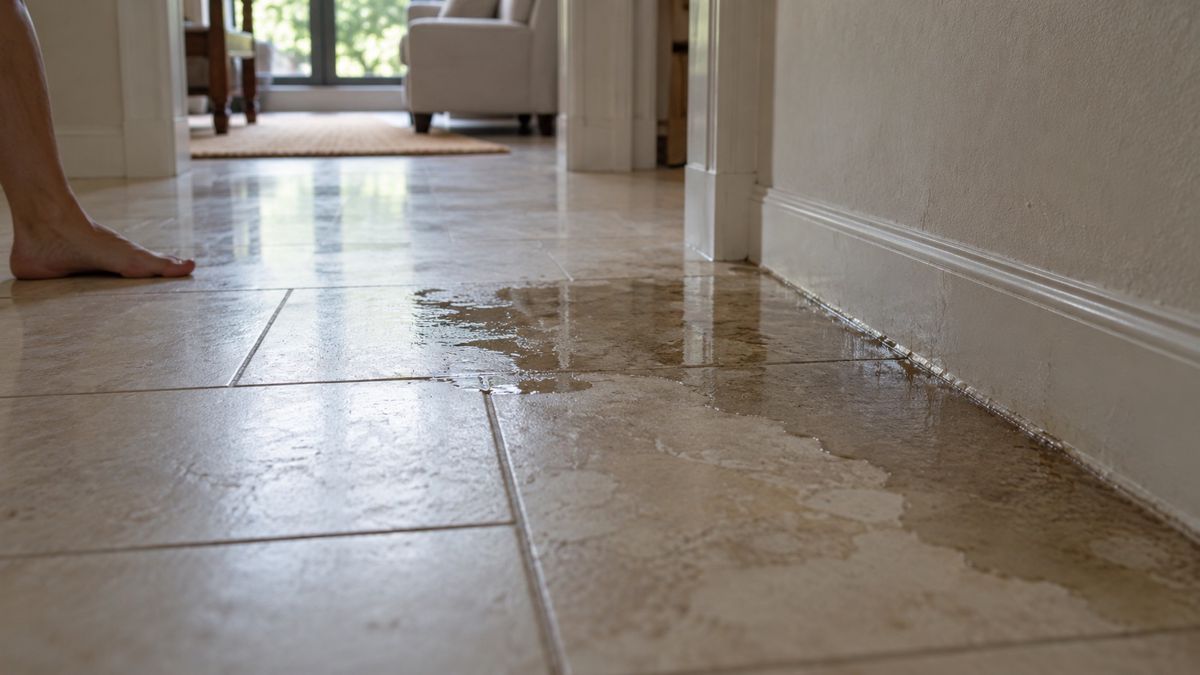
The short answer: the most common signs of a slab leak are a water bill that rises for no reason, the sound of running water when everything is off, warm spots on the floor, damp flooring or a musty smell, and a water meter that keeps moving when no one is using water. One sign on its own may have another cause. Two or three together deserve a plumber's attention.
Most homes in Austin sit on a concrete slab, which means many of the water lines run in or under the concrete. When one of them springs a leak, you cannot see it. This guide explains what to look for, why Austin houses are prone to the problem, and what happens next.
Why do slab leaks happen in Austin?
A slab leak is simply a leak in a pipe that is buried in or beneath the foundation. Several local conditions make them more likely here.
- Clay soil. Many Austin neighborhoods sit on clay that swells in wet weather and shrinks during dry spells. The ground moves under the slab, and pipes can rub against concrete or bend.
- Hard water. Austin water is hard. Over time, minerals and chemistry can wear on metal pipe from the inside, especially copper in older homes.
- Pressure. Hilly areas can have higher water pressure, which strains fittings and thin spots in pipe.
- Age. Pipes installed decades ago have simply had more time to wear.
None of this means your house has a serious flaw. It means water lines run under a floor that moves a little, and sometimes one gives way.
What are the early warning signs?
Slab leaks are quiet at the start. These signs are the ones to watch.
A water bill that climbs
If your usage rises with no change in your habits, check the bill month by month. A steady rise or a sudden jump can mean water is escaping somewhere.
The sound of running water
Stand in a quiet house with every tap and appliance off. If you hear a hiss or trickle behind a wall or from the floor, note where it is loudest.
Warm or hot spots on the floor
A leak in a hot water line can warm the concrete above it. Barefoot, you may notice one patch that is warmer than the rest of the room.
Damp flooring or a musty smell
Carpet that feels damp, tile grout that darkens, wood flooring that lifts or cups, and a stale smell in one room are all reasons to look closer.
Low water pressure
If several fixtures lose pressure and the cause is not a clogged aerator, a supply leak may be taking some of the flow.
How can I test for a slab leak at home?
You can do a simple check in about ten minutes before you call anyone.
- Turn off every faucet, appliance and irrigation system that uses water. Make sure the ice maker is not filling.
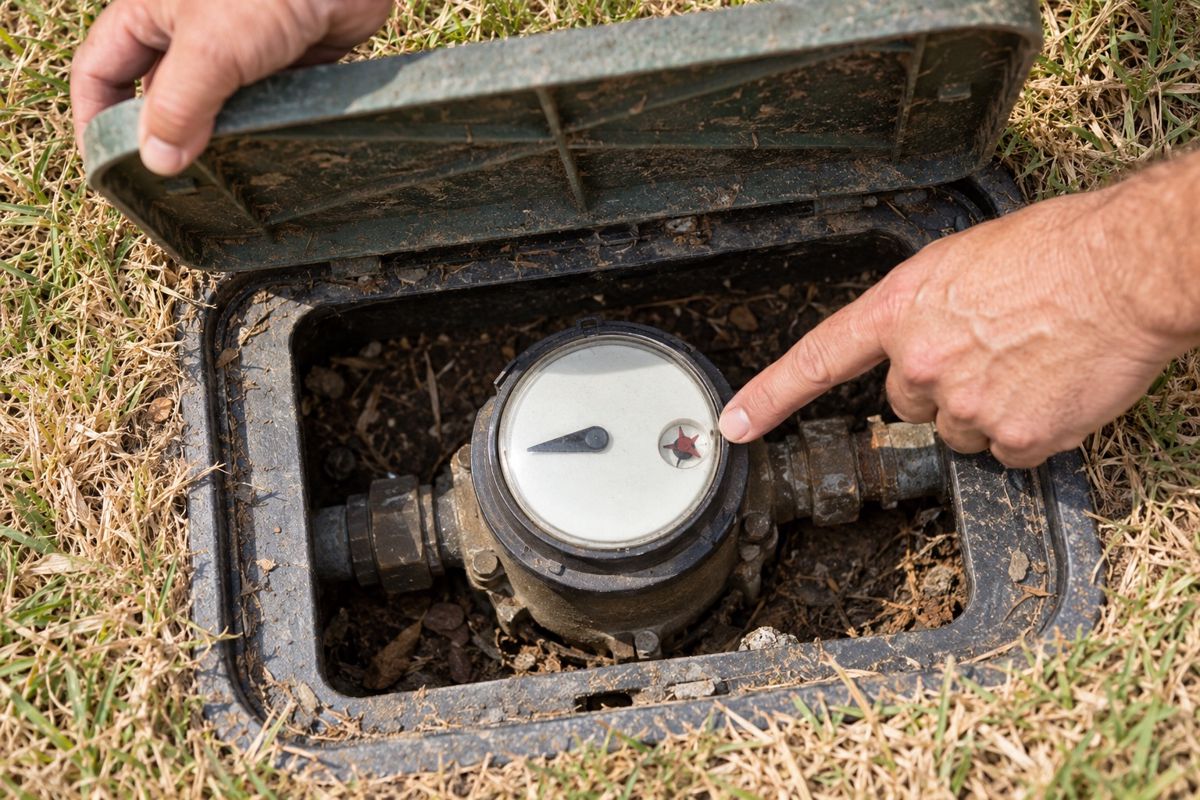
- Find your water meter and open the lid carefully.
- Look at the low-flow indicator. It is usually a small triangle, dial or star that spins when even a tiny amount of water passes through.
- If it moves with everything off, water is going somewhere.
A moving meter does not prove the leak is under the slab. Toilets that leak silently, a failing water heater and sprinkler lines can all cause the same result. Check the toilets with a few drops of food coloring in the tank and look for moisture around the water heater first.
If those are clear, turn off your main shutoff valve and check the meter again. If it stops, the leak is inside the house side of the line. If it keeps moving, the leak may be between the meter and the house, which is a different repair.
What does a plumber do to find the leak?
The goal is to find the leak without tearing up more floor than necessary. A good plumber starts with the least invasive steps.
- Pressure testing isolates the supply lines to see which one loses pressure.
- Electronic listening picks up the sound of water escaping through the slab.
- Thermal imaging can show warm patches where a hot line is leaking.
These methods work better in combination, and no single tool is perfect. You should be told how sure the plumber is of the location before anything is opened. If the result is unclear, ask what the next test would be.
What are the repair options?
Once the leak is located, you generally have three paths.
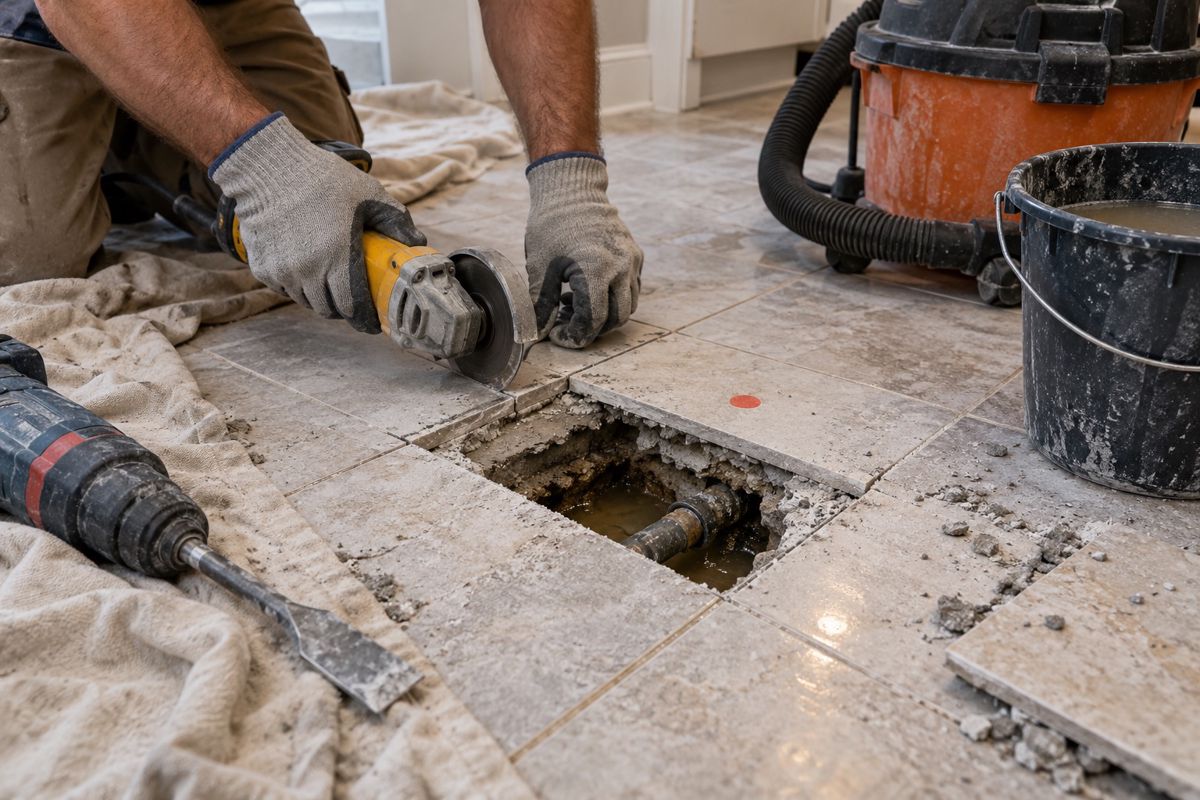
- Spot repair. The floor is opened above the leak, the pipe is fixed and the concrete is patched. This suits a single leak in otherwise sound pipe.
- Reroute. The leaking line is capped under the slab and a new line runs through walls or the attic. It avoids breaking concrete.
- Repiping. When pipes are corroded or leaks keep coming back, replacing the supply lines throughout the house can be the more sensible choice.
Cost depends on how hard the leak is to find, what floor covering sits on top, how many leaks there are, and which option you pick. Rough figures online vary widely, so ask for a written quote based on your own house.
What should I do right now if I suspect a leak?
Do not wait for a stain to appear. A hidden leak wastes water and can soak the soil around the slab. In clay areas, that extra moisture is not helpful.
- Check the meter test above and write down what you see.
- If water is clearly running and you cannot find the source, turn off the main shutoff valve and leave it off until a plumber arrives.
- Take photos of any damp flooring or cracks.
- Read your homeowner policy. Many cover damage from a sudden leak but may not pay for the pipe itself.
- Ask any plumber you call for proof of a Texas license and a written quote.
When should I call a plumber?
Call when the meter moves with everything off, a floor feels warm, you hear running water in a quiet house, or your bill climbs without explanation. Waiting rarely makes a hidden leak cheaper to fix.
If you suspect one, our page on slab leak detection and whole-house repiping explains how we find leaks and what the repair choices look like. Call (512) 555-0194 and describe what you are seeing, and we will help you decide the next step.