
Skip to content

Open 24/7Upfront pricing

Slab leaks and repiping in Austin

Slab leak detection and repiping for Austin homes

A hidden leak under your floor can run for months. Call (512) 555-0194 and we will explain how leaks are found and what the repair options are.

(512) 555-0194 Call now
  • Leak located before anything is opened up
  • Spot repair, reroute or repipe explained
  • Written quote before work starts
Request a plumber
How soon do you need help?

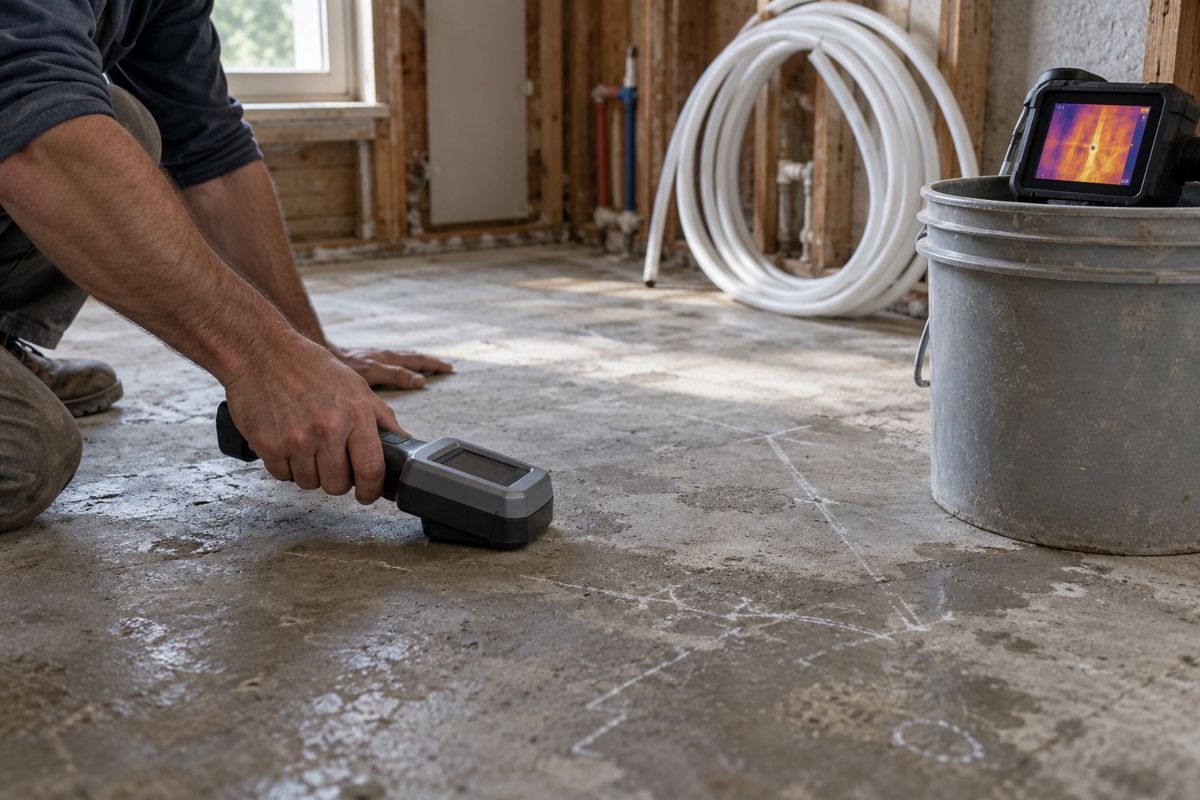
Hands using a leak detector on a bare concrete slab floor

What is a slab leak, and why do they happen in Austin?

A slab leak is a leak in a water line that runs in or under the concrete slab your house sits on. Most Austin homes are built on slabs, and many supply lines run through or beneath them. Because the pipe is buried, the leak can go unnoticed for a long time.

Several things can cause these leaks. Many Austin neighborhoods sit on clay soil that swells when wet and shrinks in drought, and that movement can rub or stress pipes. Hard water can wear on metal pipe from the inside. Pressure from a high-pressure street can add to the strain, and age plays a role in older homes with copper lines.

A slab leak is not a verdict on your house. It is a repairable plumbing problem. The earlier it is found, the less water damage and flooring work you face. If water is flowing and you cannot stop it, see emergency plumbing.

What are the signs of a slab leak?

Slab leaks hide, but they leave clues. Look and listen for these signs.

  • A higher water bill with no change in how you use water
  • The sound of running water when every fixture is off
  • Warm or hot spots on the floor, which can point to a leaking hot water line
  • Damp carpet, lifting flooring or a musty smell
  • Cracks in walls or floors, although these can have other causes
  • Low water pressure at several fixtures

A simple home test helps. Turn off every fixture and appliance, then look at your water meter. If the dial or low-flow indicator still moves, water is going somewhere. A water heater problem can look similar, so check that first. Our water heater page lists those signs.

How is a slab leak found without tearing up the floor?

Good detection is what keeps repairs small. A careful plumber works from the least invasive tests to the more involved ones.

  1. Pressure test. We isolate the supply lines and see whether pressure drops, which tells us a leak exists and which line it is on.
  2. Electronic listening. Sensitive equipment picks up the sound of escaping water through the slab.
  3. Thermal imaging. This can show warm areas where a hot line is leaking.
  4. Pinpointing. We combine the results to mark a small area on the floor.

Detection tools work best when used together. No single method is perfect, and some leaks are harder to locate than others. We will tell you how confident we are before you decide to open anything.

Once the spot is marked, you can compare repair options with an actual location instead of a guess.

Which fix fits depends on the location, the pipe condition and how many leaks you have.

Spot repair through the slab

We open the floor above the leak, fix the pipe and patch the concrete. It suits a single leak in a pipe that is otherwise in good shape.

Reroute

The leaking line is capped under the slab and a new line runs through walls or the attic. It avoids breaking the slab and is a good choice when access is difficult.

Whole-house repiping

If the pipes keep leaking, are corroded or are the same age and material everywhere, replacing the supply lines can make more sense than patching one after another. New plastic or copper lines are run through walls and attic spaces, with drywall opened and repaired.

We will explain the trade-offs in a written quote. A leak in a drain line is a different problem, covered under sewer line repair.

What affects the price, how long does it take, and when should I call?

We do not publish prices, because every leak is different. These factors drive the quote.

  • How hard the leak is to locate
  • Floor finishes like tile, hardwood or carpet that must be removed and replaced
  • The number of leaks and the age of the pipe
  • Whether you choose a spot repair, a reroute or a repipe
  • The size of the house and how many fixtures it has

Timing varies. A spot repair is often a matter of a day or two, plus floor repair. Repiping a whole house commonly takes several days, and the water is off for part of that time. We will plan the schedule with you and tell you what to expect.

Call when your bill jumps, you hear water running, a floor feels warm, or the meter moves with everything off. Insurance may cover damage that results from a sudden leak, so check your policy before repairs. You can also start from the Austin plumber home page.

What you can expect

1

Open 24/7

2

Upfront pricing

3

Clear communication

4

Local plumbers

How soon do you need help?

Questions about emergency plumber in Austin

How can I tell if my water bill increase is from a slab leak?

Compare your usage to the same months last year. If it has jumped with no change in habits, check the meter with all water off. If the dial still moves, water is escaping somewhere. A slab leak is one possibility, along with toilet leaks and irrigation. A plumber can narrow it down.

Will a slab leak damage my foundation?

A long-running leak can soften the soil around a slab, and in clay areas that can add to movement. It does not always cause foundation damage, though. Fixing the leak early is the best protection. If you see new cracks or doors sticking, ask a foundation specialist as well.

Is repiping the whole house always necessary?

No. If you have one leak and the rest of the pipe is in good shape, a spot repair or reroute may be enough. Repiping makes sense when leaks keep returning or pipe is corroded throughout. We explain both options so you can choose with the facts in hand.

Does homeowner insurance cover a slab leak?

It depends on the policy. Many cover water damage from a sudden leak but may exclude the cost of repairing the pipe itself or limit coverage for hidden leaks. Read your policy or call your agent before work begins, and ask your plumber for a written report of the cause.

Can I stay in my house during a repipe?

Most people can, but there will be disruption. Water is off for part of the work, walls are opened and there is dust. We plan the order of work to keep the time without water as short as practical and explain it in advance so you can arrange around it.

How it works

  1. Call or tap for help

    Tell us what is wrong. We answer around the clock.

  2. Plumber dispatched

    The nearest plumber heads your way with a stocked van.

  3. Fixed with a written price

    You approve the price before any work starts.

Ready when you are. Call now or request a quote online.

Takes about 30 seconds. Request a plumber