
Skip to content

Open 24/7Upfront pricing

Sewer lines in Austin

Sewer line repair and trenchless replacement in Austin

Backups, slow drains and sinkholes can point to a broken sewer line. Call (512) 555-0194 and we will inspect the line and explain the options.

(512) 555-0194 Call now
  • Camera inspection to see the damage
  • Dig and trenchless options explained
  • Written quote before work starts
Request a plumber
How soon do you need help?

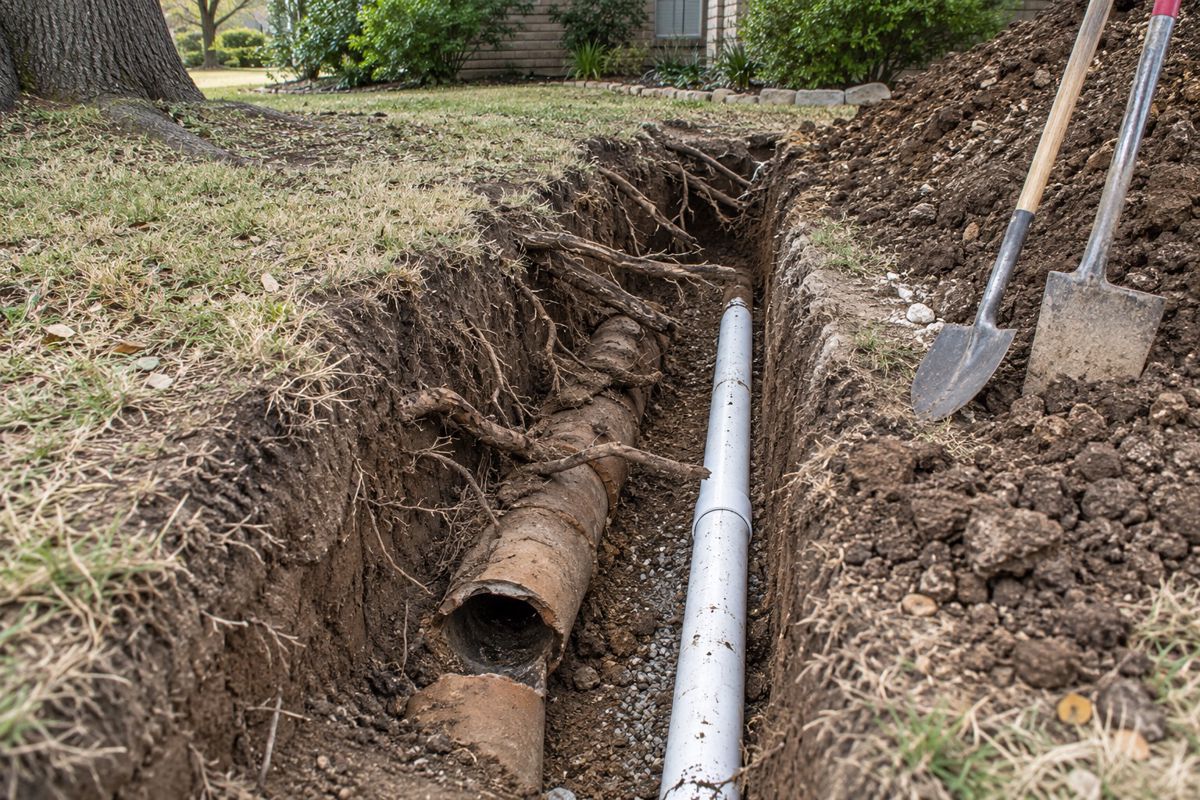
Open yard trench showing old clay sewer pipe and new pipe

What are the signs of a damaged sewer line?

A damaged sewer line does not always announce itself with a flooded floor. Watch for these earlier signs.

  • Several drains slow down or back up at the same time
  • Gurgling from toilets or tubs when water runs elsewhere
  • Sewage smells inside the house or in the yard
  • Soggy or unusually green patches in the lawn
  • A sinkhole or sunken area in the yard
  • Water or sewage coming up in a floor drain or tub

These symptoms can also come from a simple clog, so a camera inspection is the best way to know. We send a camera through the line, mark the location of any problem and show you what is there. If the pipe is only dirty, drain cleaning may be enough. If it is cracked, offset or collapsed, you need a repair.

What damages sewer lines in Austin?

Several local factors work against buried pipe here.

Clay soil movement

Many Austin neighborhoods sit on clay that swells in wet weather and shrinks in dry spells. Over time, the movement can pull joints apart or bend the pipe, creating low spots where waste collects.

Roots

Live oaks, pecans and cedar elms send roots toward moisture. They find small gaps and grow inside the pipe.

Age and material

Older central areas, including parts of Hyde Park and nearby streets, may have clay or cast iron lines that have been in the ground for decades. Some mid-century homes may have fiber pipe that can deform. Newer plastic pipe holds up better, but poor bedding or settling can still cause trouble.

On most properties the homeowner is responsible for the line from the house to the point where it joins the city main. Check with the city if you are unsure where that point sits on your lot.

What are my repair options: digging or trenchless?

There are three broad ways to fix a sewer line, and the right choice depends on what the camera shows.

  • Spot repair. We dig down to a single damaged section and replace it. This suits one clear break in a shallow, accessible spot.
  • Pipe bursting. A new pipe is pulled through the old one as it breaks apart. It needs small access pits instead of one long trench.
  • Pipe lining. A resin liner is inflated inside the old pipe and hardens into a new pipe within the old one. It works best on pipe that is still in line.

Trenchless methods can protect landscaping, driveways and trees, but they are not right for every line. A collapsed or badly offset pipe may need to be dug up.

A written quote will compare the options for your yard. If the problem is a simple blockage, our hydro jetting may clear it first.

Sewer jobs are the hardest to price without seeing the pipe. These factors matter most.

  • Length and depth of the damaged section
  • What sits above the pipe. Lawn is simple. A driveway, patio, tree or fence adds work.
  • Method. Spot digs, bursting and lining are priced differently.
  • Pipe size and material
  • Permits and inspections. Sewer work on private property can need a city permit and inspection. Ask your plumber to explain the process.
  • Utility locates. In Texas, anyone digging should have underground lines marked first through Texas811.

Repair costs can also change when the camera finds more damage than expected. We will explain what we found and why before asking you to approve anything. For hidden leaks in supply lines under the house, see slab leak detection.

How long does it take and when should I call?

The timeline depends on the method and the site. A small spot repair can be quick. A longer replacement takes more time, and curing a pipe liner adds waiting time. Weather, permits and inspections can also affect the schedule. We will explain your timeline when we quote the job.

On the day, we mark utilities, set up access, protect the yard as much as we can, and complete the repair. We test the line, camera it again where useful, and backfill the work area. Some settling of soil is normal, so we explain what to expect.

Call promptly if

  • Sewage is coming up in a tub, shower or floor drain
  • Multiple fixtures back up at once
  • You see a sinkhole or sunken patch in the yard
  • A camera or past plumber has found a crack or roots

For urgent water problems, visit emergency plumbing or return to the Austin plumber home page.

Open 24/7
Upfront pricing
Clear communication
Local plumbers
How soon do you need help?

Questions about emergency plumber in Austin

How do I know if the problem is the sewer line or a clog?

A clog in one fixture usually affects only that fixture. When several drains slow down, toilets gurgle, or sewage backs up in the lowest drain, the main line is more likely the problem. Only a camera inspection can say for sure whether it is a blockage or damaged pipe.

Is trenchless sewer repair always better than digging?

No. Trenchless methods can save landscaping and concrete, but they need a pipe that is in reasonable shape. A collapsed, badly offset or very shallow pipe may be better replaced by digging. We explain which option fits what the camera shows and what each one involves.

Who is responsible for the sewer line on my property?

In most cases the homeowner owns the line from the house to the connection with the city main. The utility handles the main itself. Where the boundary sits can vary, so contact the City of Austin if you are unsure. Your plumber can also help you work out where the problem is.

Do I need a permit for sewer repair?

Often yes, especially for replacing a section of line. Rules and inspections can differ by project and location, so ask your plumber how permits will be handled before work begins. Also, call 811 so underground utilities are marked before any digging starts.

Can tree roots be stopped from coming back?

Cutting or jetting roots clears the line but does not stop regrowth if the pipe still has gaps. Repairing or lining the pipe seals those gaps and is the longer-lasting fix. Removing a tree is a big decision, so we usually deal with the pipe first.

How it works

  1. Call or tap for help

    Tell us what is wrong. We answer around the clock.

  2. Plumber dispatched

    The nearest plumber heads your way with a stocked van.

  3. Fixed with a written price

    You approve the price before any work starts.

Ready when you are. Call now or request a quote online.

Takes about 30 seconds. Request a plumber