
Skip to content

Open 24/7Upfront pricing

Drain cleaning in Austin

Drain cleaning and hydro jetting for Austin homes

Slow sinks, gurgling pipes and tubs that will not empty point to a problem in the line. Call (512) 555-0194 and we will find the cause, not just the clog.

(512) 555-0194 Call now
  • Snaking, camera checks and hydro jetting
  • Cause found, not just the clog cleared
  • Written quote before work starts
Request a plumber
How soon do you need help?

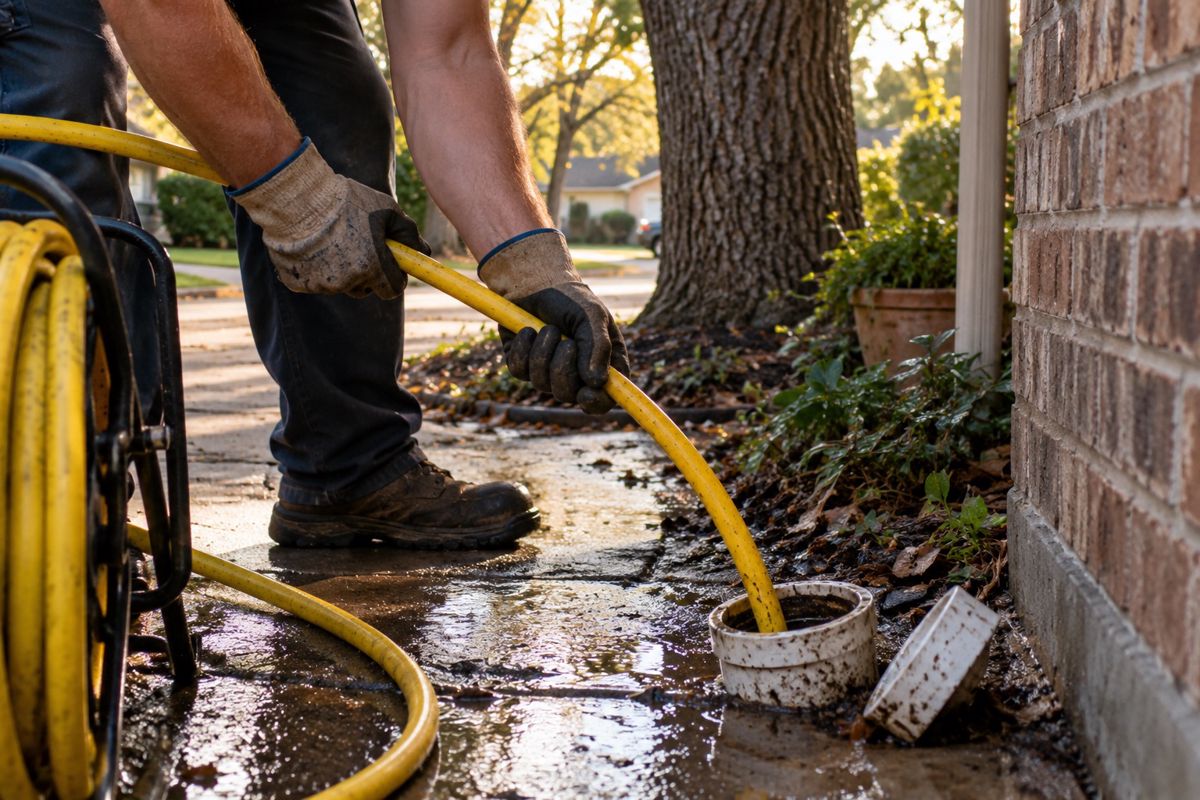
Hands feeding a hydro jetting hose into an outdoor clean-out

Why is my drain slow or backing up?

A single slow sink usually has a local clog, such as hair, soap residue, grease or food in the trap or branch line. When several fixtures slow down together, or a toilet bubbles when the washer drains, the blockage is probably further along in the main line.

Austin's hard water adds to the problem. Calcium and soap combine into a coating that narrows the inside of the pipe, so debris catches more easily. Over time, the pipe is only partly open, even when it does not look clogged.

Common causes

  • Hair and soap in bathroom drains
  • Grease and food scraps in kitchen lines
  • Wipes labeled flushable, which do not break down
  • Tree roots that enter through small joint gaps
  • A cracked or sagging pipe that holds water and debris

How do you clear a drain: snaking or hydro jetting?

The right tool depends on what is in the line.

Snaking

A drain machine with a cable and cutting head breaks through a blockage and pulls out the debris. It works well for hair, paper and simple clogs in sinks, tubs and branch lines. It opens a hole through the blockage but may leave a coating on the pipe walls.

Hydro jetting

Hydro jetting uses high-pressure water from a nozzle to scour the inside of the pipe. It cuts grease, scale and soft roots and leaves the pipe cleaner than a cable alone. It is a good option for kitchen lines, main lines with repeat clogs and pipes with heavy buildup.

Jetting is not suited to every pipe. A damaged or collapsed line should be checked first. If a camera shows broken pipe, the answer is sewer line repair, not more water pressure.

Will a camera inspection help?

When a drain clogs again and again, clearing it is only half of the job. A drain camera shows what is happening inside the pipe, so you are not guessing.

We feed a small waterproof camera down the line and watch the screen. It can show grease buildup, roots, a belly where the pipe has sagged, a cracked joint or an offset connection. It also confirms that the line is clear after cleaning.

This matters in Austin because clay soil moves, and older homes in central neighborhoods may still have cast iron or clay pipe that has shifted over time. Newer slab homes can have problems at joints where the pipe leaves the house.

If the camera shows damage, we explain what we see and your options. If the line is only dirty, you can keep the cleaning as a repeat maintenance task and decide how often it makes sense.

There is no honest flat price for every drain. Here is what moves the number.

  • Which drain. A bathroom sink is simpler than a main line.
  • Access. A clean-out outside makes the job easier. Without one, we may need to pull a toilet or work through a roof vent.
  • Method. Snaking, jetting and camera work are priced differently.
  • Severity. Heavy roots or years of grease take more time.
  • What the camera finds. If the pipe is damaged, cleaning alone may not solve it.

You will get a written quote before work starts. If the same drain has clogged several times, it is worth paying for the camera look so you know the cause. In some houses the signs overlap with a slab leak when a drain line under the floor is damaged, which is another reason to inspect before repeating a quick fix.

What happens on the day, and how do I prevent clogs?

On the day we ask which fixtures are affected, find the right access point, and protect the floor. Then we clear the line, run water to test the flow, and camera it if needed. A simple clog can be done in under an hour or two. A main line with heavy buildup takes longer.

To prevent repeat clogs:

  • Keep grease out of the kitchen sink and put it in the trash
  • Use hair catchers in tubs and showers
  • Only flush toilet paper, never wipes
  • Avoid harsh chemical drain openers, which can damage older pipes and are risky if a plumber has to work on the line after

Call when more than one drain is slow, when sewage smells appear, or when water comes up in a tub or floor drain. For flooding, see our emergency plumbing page, or return to the Austin plumbing home page.

Open 24/7
Upfront pricing
Clear communication
Local plumbers
How soon do you need help?

Questions about emergency plumber in Austin

What is the difference between snaking and hydro jetting?

Snaking uses a cable to break through a clog and pull it out. Hydro jetting uses high-pressure water to scour the inside of the pipe, removing grease, scale and soft roots. Snaking is quick for simple clogs. Jetting is better for repeat problems or heavy buildup, as long as the pipe is sound.

Is it safe to use chemical drain cleaner?

We advise against it. Strong chemicals can damage older pipes and fixtures, and they are a hazard to anyone who has to work on the line afterward. They also often fail on a real clog. Try a plunger first, and call a plumber if the drain keeps slowing down.

Why does my kitchen sink keep clogging?

Grease is the usual reason. It cools inside the pipe, sticks to the wall and traps food. Hard water scale can make the surface rough, so more debris sticks. A garbage disposal does not solve this. Jetting can clean the line, and keeping grease out of the sink helps prevent a repeat.

Can tree roots get into my sewer line?

Yes. Roots follow moisture and can enter through tiny gaps at joints in clay, cast iron or older pipe. Austin has many large live oaks, pecans and cedar elms. A camera inspection shows how far the roots go and whether the pipe needs repair or only cleaning.

How often should I have my drains cleaned?

There is no fixed schedule. If your drains run freely, you do not need regular cleaning. If you have had repeat clogs, heavy grease or root problems, a plumber may recommend a camera check and periodic jetting. Your own history with the line is the best guide.

How it works

  1. Call or tap for help

    Tell us what is wrong. We answer around the clock.

  2. Plumber dispatched

    The nearest plumber heads your way with a stocked van.

  3. Fixed with a written price

    You approve the price before any work starts.

Ready when you are. Call now or request a quote online.

Takes about 30 seconds. Request a plumber